Sciatica: Symptoms, Causes and 5 Exercises That Help (with Motion Guides)
Sciatica sends pain, tingling or numbness from the lower back down the leg. Learn what causes it, follow animated exercise guides, and know when to see a physiotherapist or doctor.
Sciatica is the name for pain that travels along the sciatic nerve — from the lower back or buttock, down the back of the thigh and sometimes into the calf and foot. It often comes with tingling, numbness or a burning feeling. Sciatica is a symptom, not a disease: something is irritating the nerve, most often near the lower spine.
The good news is that most sciatica settles within weeks to a few months with the right movement and care.
Common symptoms
- Pain that runs from the buttock down one leg, often worse than the back pain itself.
- Tingling, pins and needles or numbness in the leg or foot.
- Pain that gets worse with long sitting, coughing or sneezing.
- A heavy or weak feeling in the leg.
What causes sciatica?
- A bulging (herniated) disc pressing on a nerve root — the most common cause.
- Narrowing of the spinal canal (spinal stenosis), more common after 50.
- Tight or irritated muscles in the buttock (piriformis syndrome).
- Long hours of sitting, heavy lifting with a bent back, and weak core muscles add to the risk.
Keep moving — gently
Long bed rest usually slows recovery. Short walks through the day, changing position often and the exercises below help the nerve calm down. Move slowly; a mild stretch is fine, but stop if pain spreads further down the leg or the tingling gets stronger.
Exercise 1 — Seated nerve glide
This gently "flosses" the sciatic nerve so it moves more freely. It should feel like light tension, never a strong pull.
Seated sciatic nerve glide
1/2Sit tall, bend the knee and look down
Dose: 10 slow glides
Exercise 2 — Knee-to-chest stretch
Eases tension in the lower back and buttock. Pull only as far as is comfortable.
Single knee-to-chest stretch
- 1. Lie on your back with both knees bent
- 2. Hug one knee to your chest and hold
Dose: Hold 20 s · 3 each side
Exercise 3 — Glute bridge
Strengthens the buttock and core muscles that support your lower back.
Glute bridge
- 1. Knees bent, feet flat, arms by your side
- 2. Squeeze your buttocks and lift your hips
Dose: Hold 3–5 s · 10 times
Two more to add as pain settles
- 1Walking — start with 10 minutes, two or three times a day, and build up slowly.
- 2Child's pose — kneel, sit back towards your heels and stretch your arms forward on the floor. Hold 20–30 seconds.
Do the exercises once or twice a day. If one clearly makes your leg pain worse, leave it out.
How physiotherapy helps sciatica
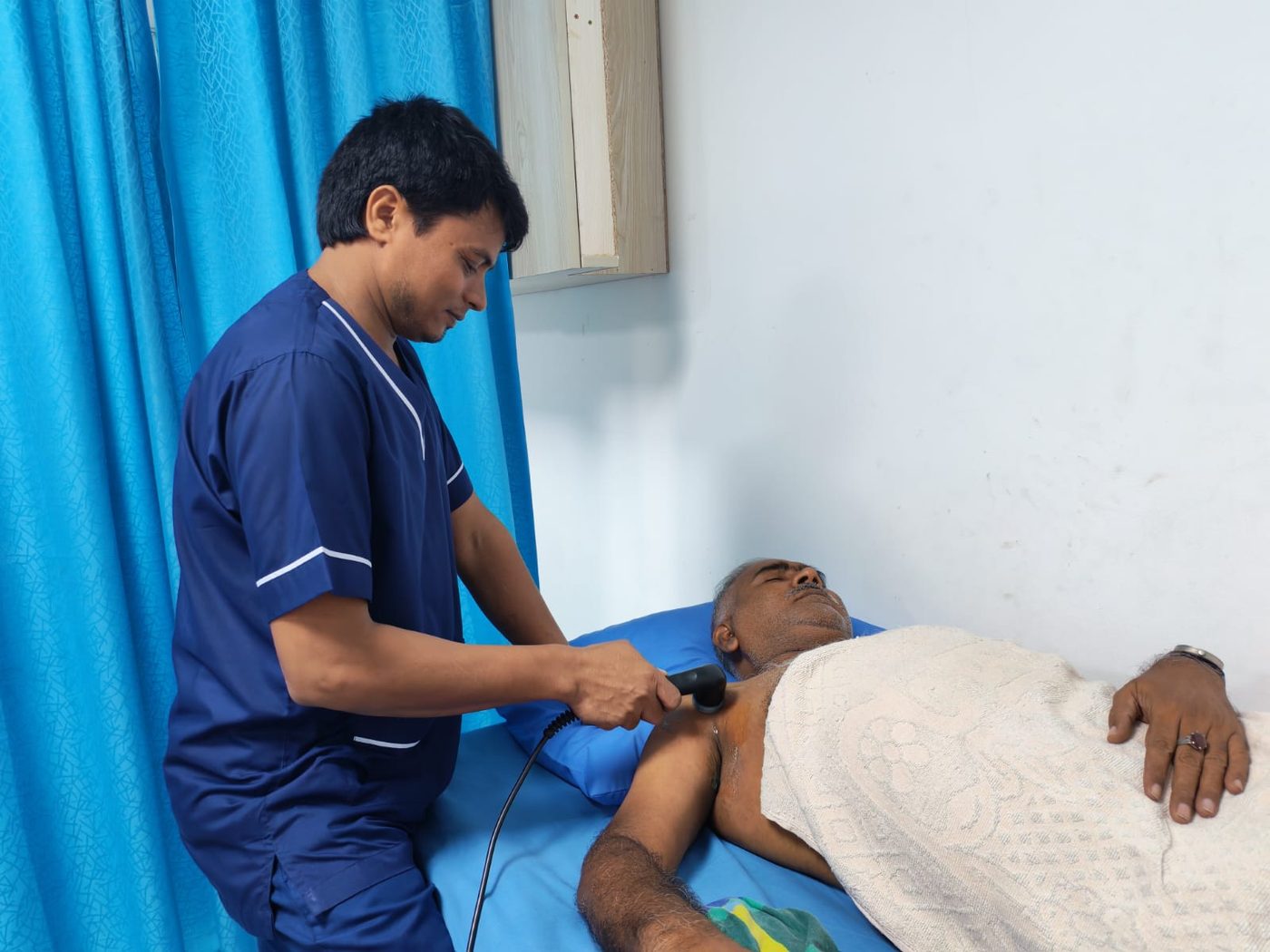
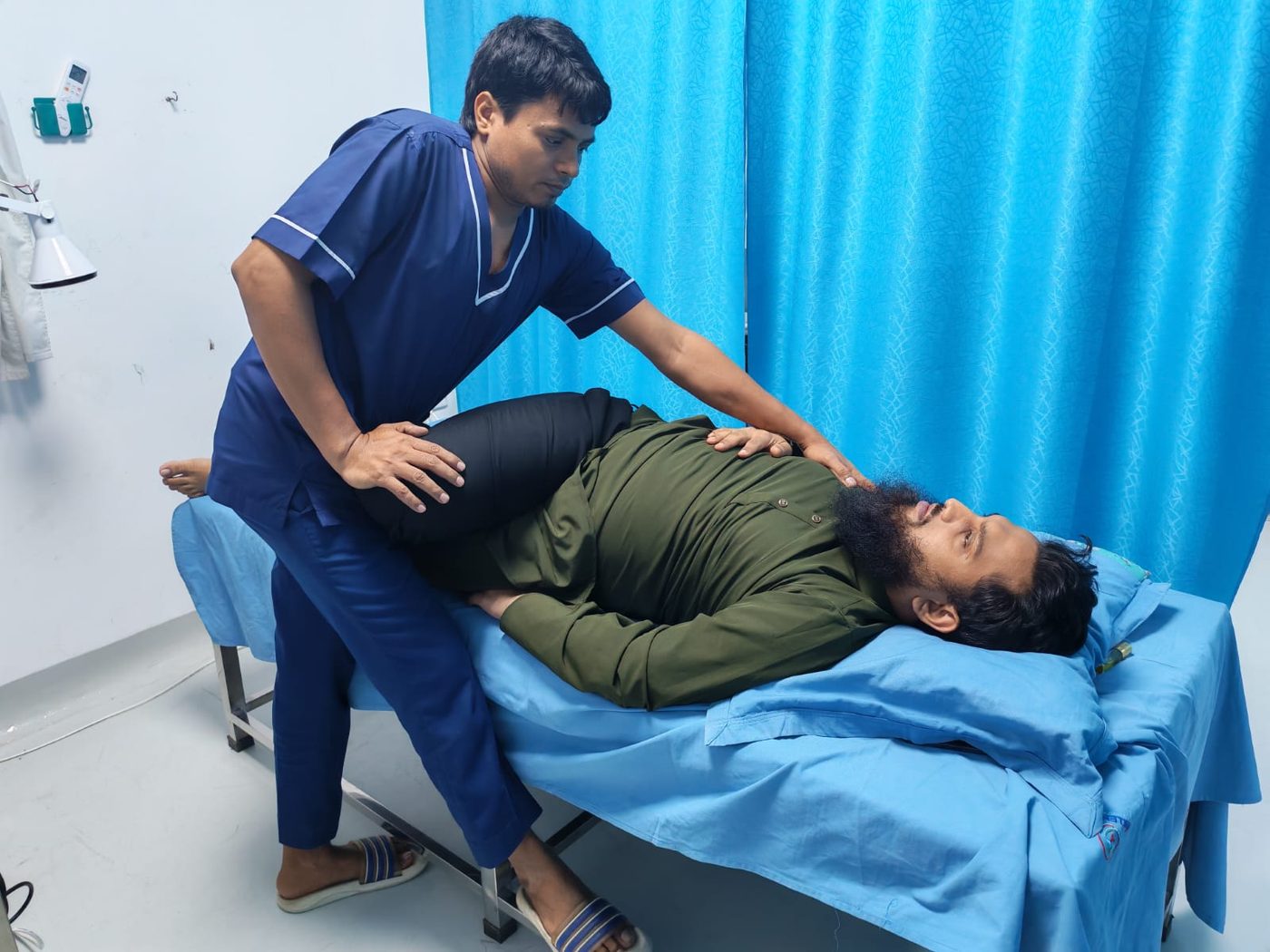
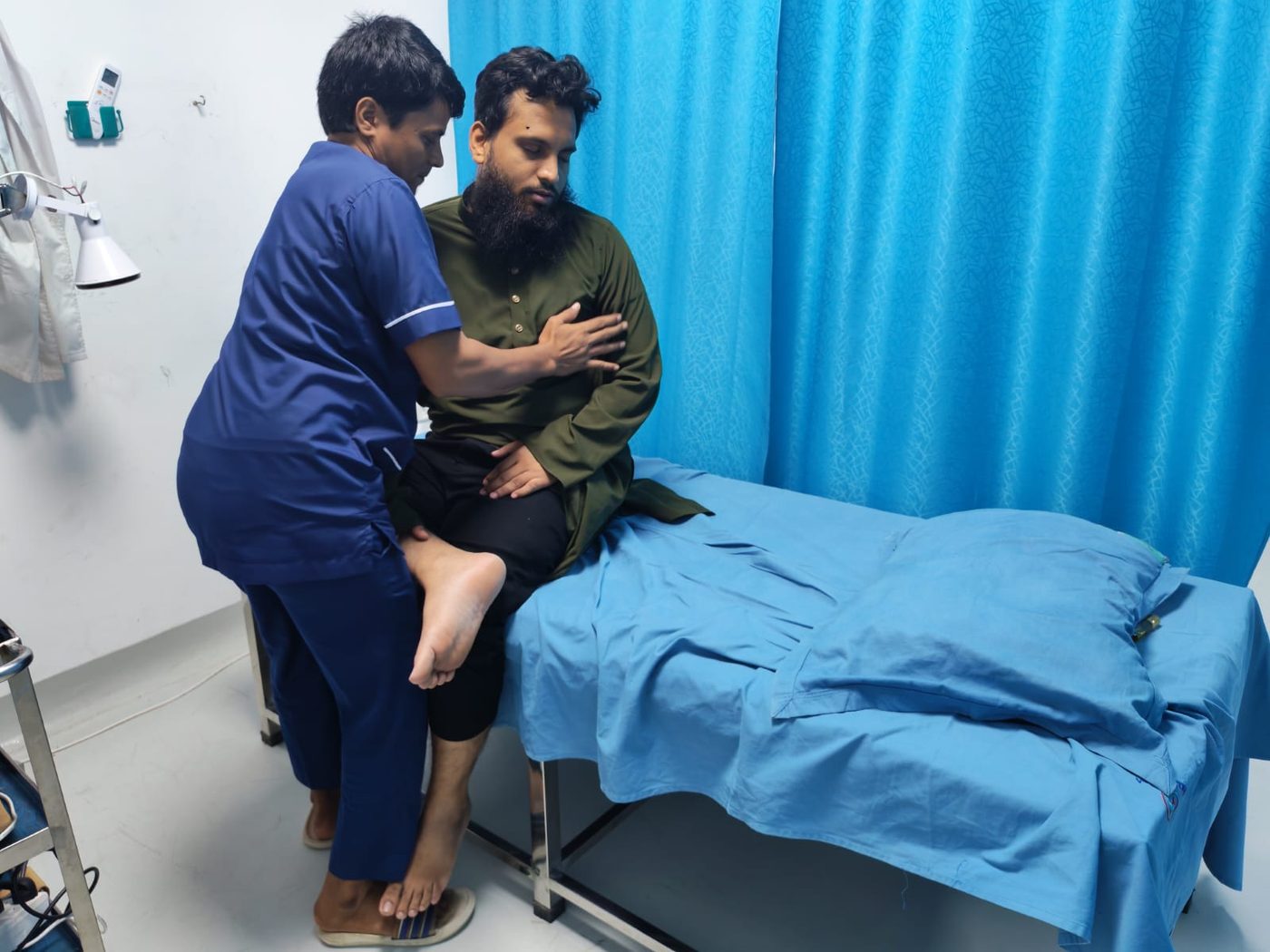
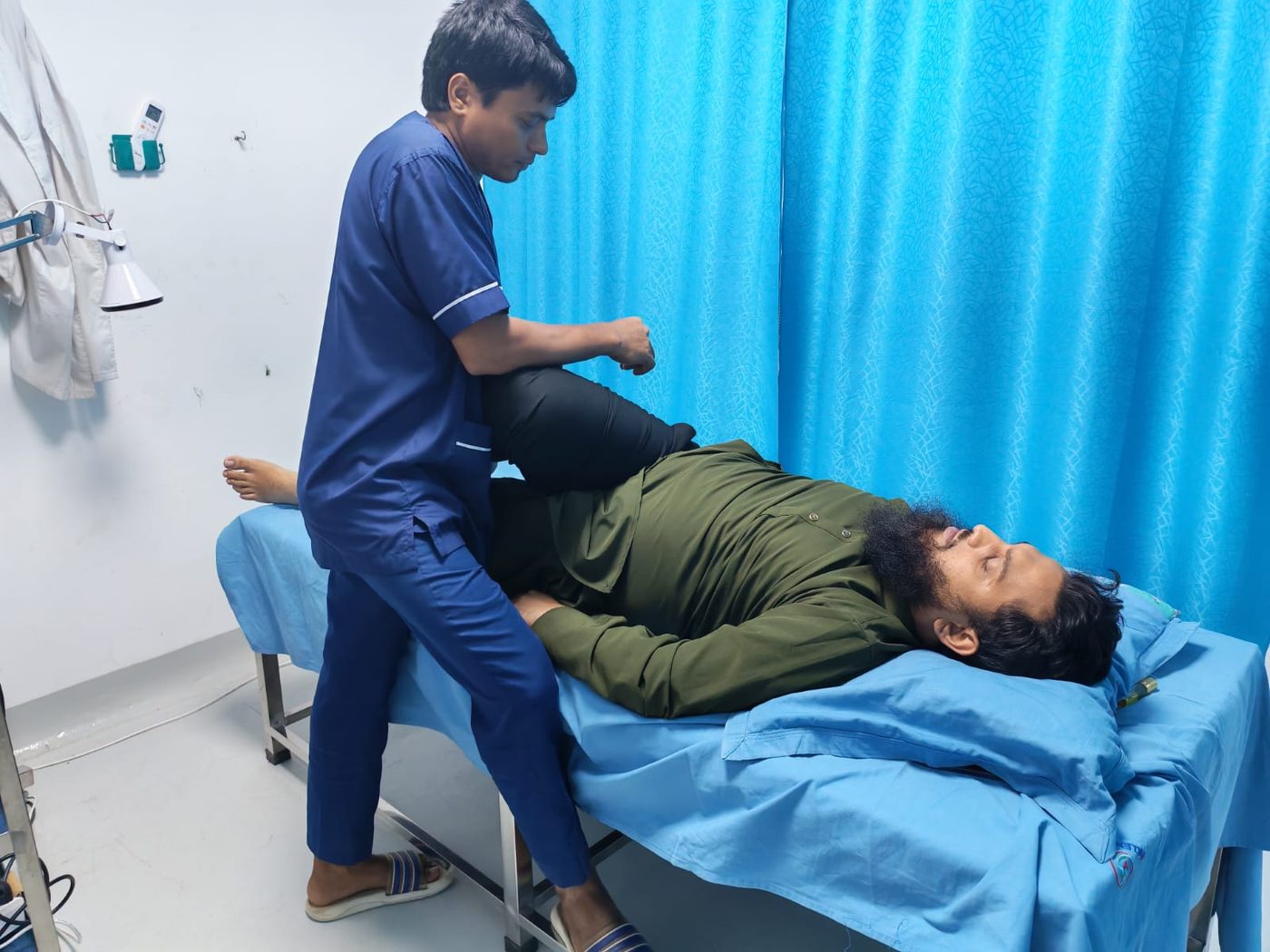
A physiotherapist checks your back, hips and nerve movement to find what is driving the pain, then plans treatment that may include:
- Specific exercises to take pressure off the nerve.
- Manual therapy and soft-tissue release.
- Electrotherapy (such as TENS) for pain relief where useful.
- Advice on sitting, sleeping, lifting and returning to work or prayer positions.
Warning signs — see a doctor urgently
This article is general information, not a diagnosis. If leg pain is not easing after 2–3 weeks, book an assessment.
This article is for general education and is not a substitute for a personal medical assessment.