Heel Pain and Plantar Fasciitis: Stretches, Daily Tips and Recovery (with Motion Guides)
Sharp heel pain with your first steps in the morning is a classic sign of plantar fasciitis. Follow animated stretch guides, daily tips and learn how physiotherapy speeds recovery.
If the first few steps after getting out of bed feel like stepping on a sharp stone, you may have plantar fasciitis — the most common cause of heel pain in adults. The plantar fascia is a strong band of tissue under the foot that supports your arch. When it is overloaded, it becomes irritated where it attaches to the heel bone.
Typical signs
- Sharp pain under the heel with the first steps in the morning or after sitting.
- Pain that eases after walking a little, then returns after long standing.
- Tenderness when pressing the inside of the heel.
Who gets it?
- People who stand or walk for long hours, especially on hard floors.
- Being overweight, or a sudden increase in walking or running.
- Tight calf muscles and flat or very high arches.
- Thin, worn-out or completely flat shoes and walking barefoot on hard floors.
An X-ray sometimes shows a "heel spur", but the spur itself is often not the cause of the pain — the irritated fascia is.
Exercise 1 — Wall calf stretch
A tight calf pulls on the heel and the fascia. Stretching it is one of the most helpful things you can do.
Wall calf stretch
- 1. Hands on the wall, back leg straight, heel down
- 2. Lean forward until the calf stretches — hold
Dose: Hold 30 s · 3 each side
Exercise 2 — Arch roll with a ball or bottle
Roll your foot over a bottle or ball to loosen the sole. In summer, a frozen water bottle also cools the area.
Arch roll with a ball or bottle
- 1. Roll the arch forward over the ball or bottle
- 2. …and back again, with gentle pressure
Dose: 1–2 minutes
Exercise 3 — Heel raises
Strong calf and foot muscles share the load with the fascia. Start with both feet; later try one foot at a time.
Heel raises
1/2Stand tall, hands resting on a support
Dose: 10–15 times
Daily tips for faster recovery
- Stretch before your first steps in the morning — pull your toes back towards you with a towel for 30 seconds.
- Wear supportive shoes with a cushioned heel, even at home; avoid walking barefoot on hard floors.
- Reduce long periods of standing where you can, and break up long walks.
- Gradually lose weight if you are overweight — it takes load off your feet.
How physiotherapy helps
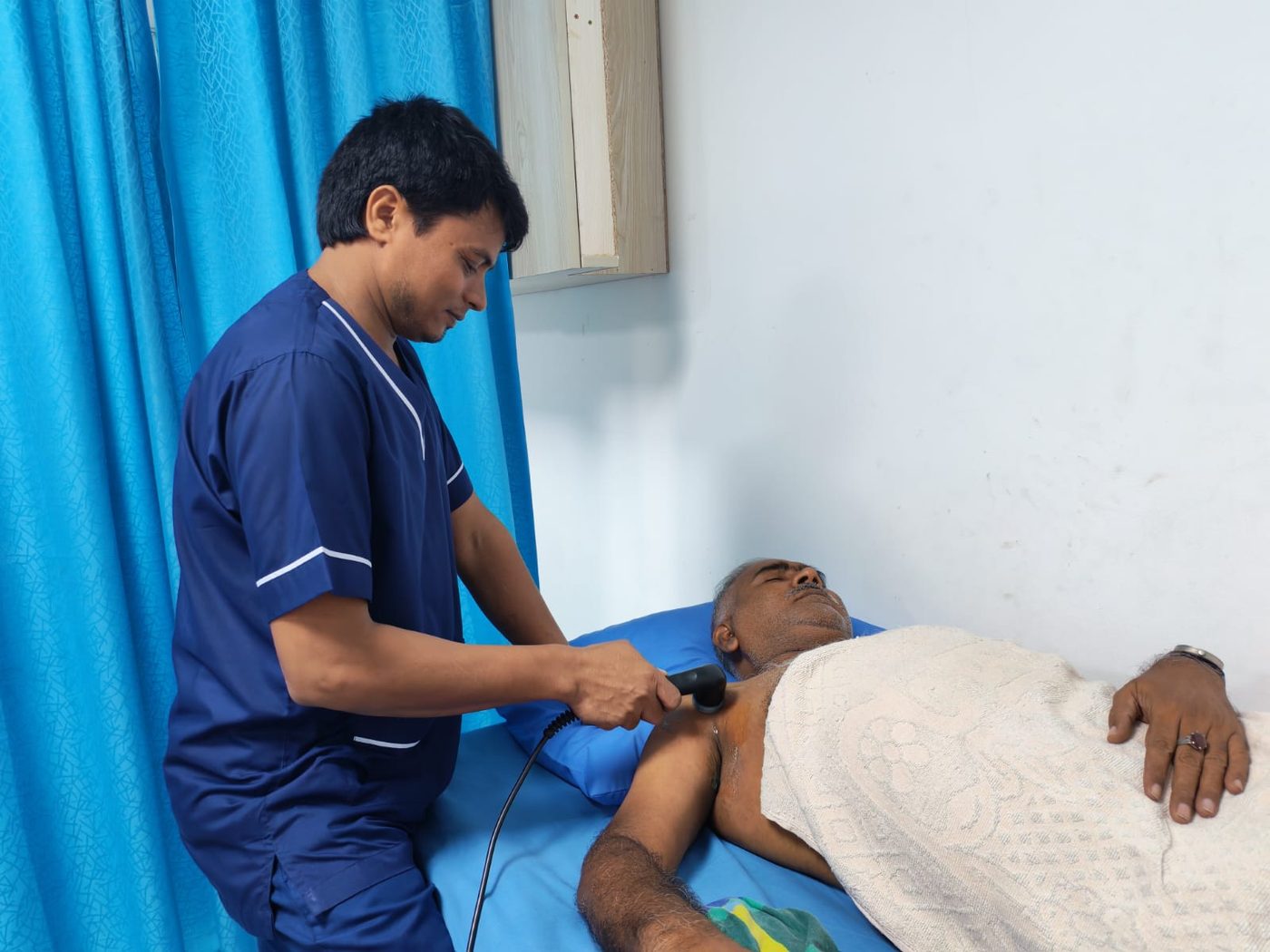
Most people improve over several weeks to a few months. Physiotherapy can speed this up with a stretching and strengthening programme, soft-tissue release, taping to support the arch, advice on footwear and insoles, and electrotherapy such as ultrasound where suitable.
When to see a doctor
This article is general information, not a diagnosis. If heel pain is not improving after a few weeks of stretching, book an assessment.
This article is for general education and is not a substitute for a personal medical assessment.